Why your bass shaker comes alive with films and stays quiet with music
A bass shaker or tactile transducer makes no sound. It turns low frequencies into vibration and bolts under your seat, your couch or your floor. With a film it hits straight away. With music the thing often stays suspiciously quiet, and that is when people reach for the amplifier gain. That is the wrong knob.
Why films work
A film has a dedicated channel for the lowest bass, the LFE. It deliberately carries material well below 30 hertz, because that is where an explosion or a helicopter gets its weight from. Your shaker is handed exactly what it was built for, and you feel it.
Why music rarely has it
Mastering music filters out everything below roughly 30 hertz. That is not carelessness: it saves headroom, keeps the mix clean and stops small speakers from rattling. But it does mean there is almost nothing left for your shaker to work with.
Why turning it up makes it worse
If there is nothing below 40 hertz, that knob amplifies the region above it. That is the region you are already listening to. You do not get depth, you get a buzz in your chair that feels the same on every track and starts to annoy you after half an hour.
What actually has to happen
Content has to be added in the region a shaker is best at. A subharmonic processor works out what belonged below the audible range and puts it back, from 40 hertz down to 10 hertz. Your shaker then gets with music what it already got with a film, without turning anything up.
Where the unit sits in the chain
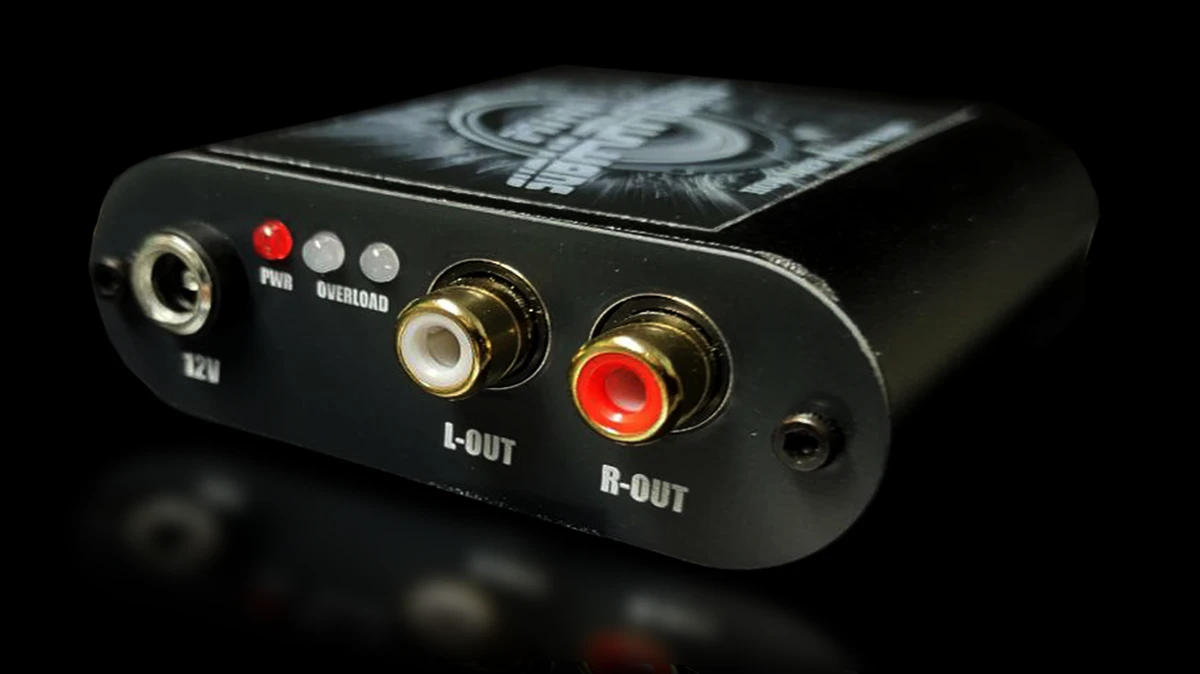
The Mini SubHarmonics works at line level, so between your source or receiver and the amplifier driving the shakers. It does not replace that amplifier. It decides what goes into it.
Honest about the limit
How low you actually get depends on your shaker and on what it is mounted to. A light couch passes on something different than a floor on concrete. We create the content, what your setup does with it stays your setup. If your shaker has been sitting at maximum all day with nothing to show for it, this is probably the reason, and not your amplifier.
The sub-bass being generated, visible on the indicators.

The Mini SubHarmonics is 199 euro, stereo, runs on 12 volts and is handbuilt in the Netherlands.